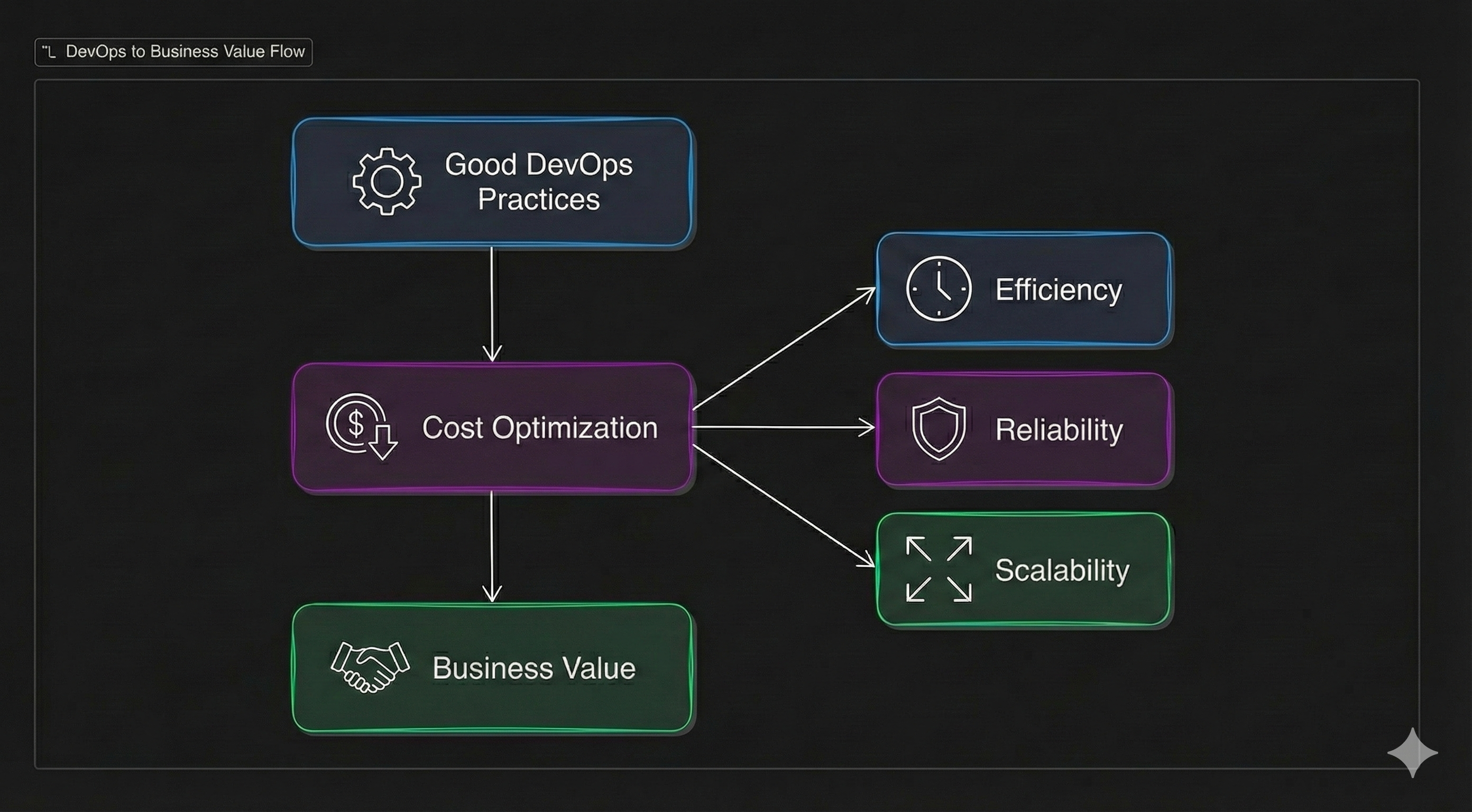
Why Cost Optimization Matters in DevOps
Cost optimization isn't about cutting corners. It's about:
- Paying only for what you actually need
- Improving efficiency without sacrificing reliability
- Making infrastructure predictable and scalable
Good DevOps practices naturally lead to lower cloud costs.
1. Right-Size Your Resources
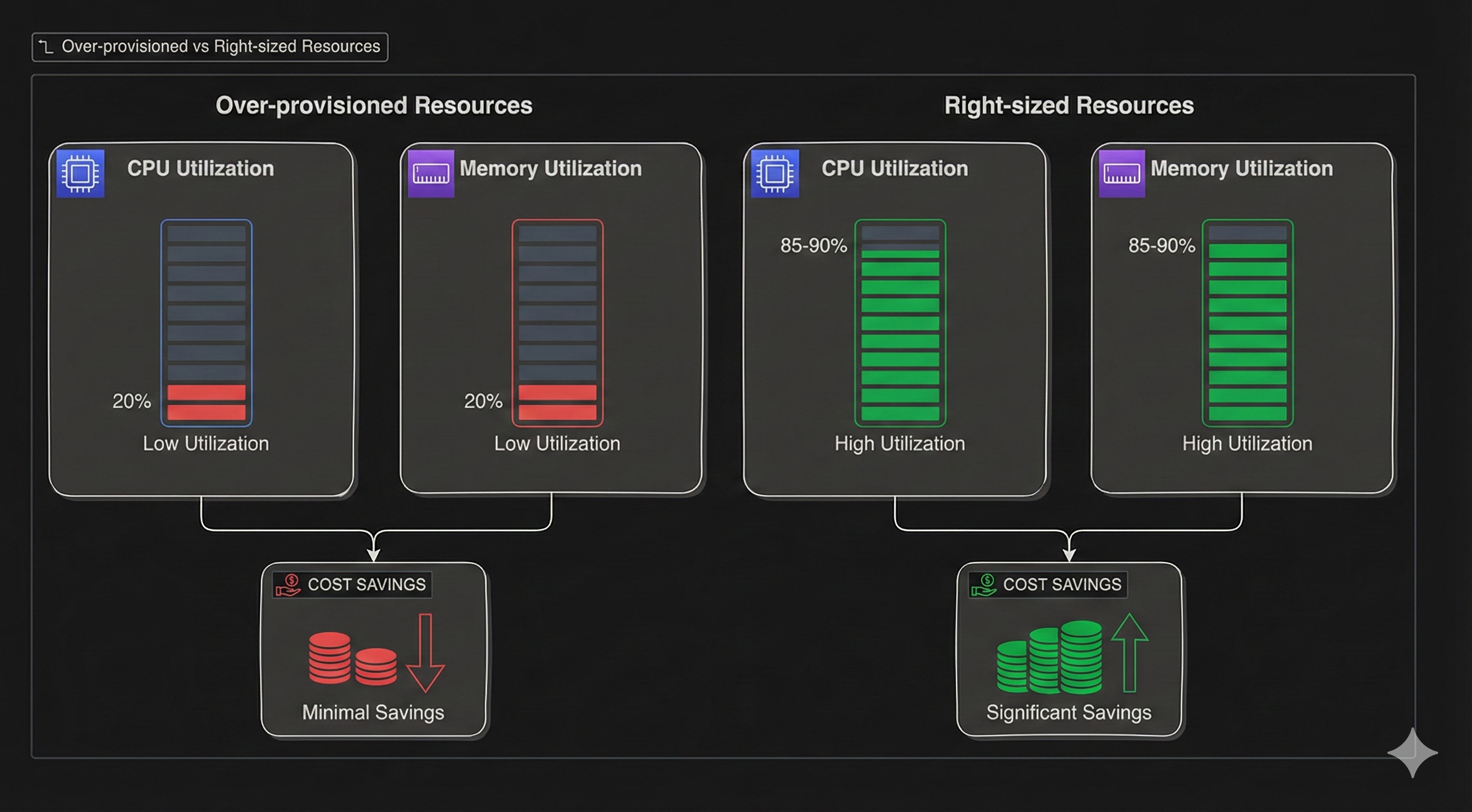
One of the biggest sources of wasted cloud spend is over-provisioning.
Common mistakes:
- Large instances running at low utilization
- Kubernetes pods requesting far more CPU and memory than needed
- Production-sized resources used in non-production environments
What to do:
- Analyze CPU and memory usage trends
- Adjust instance sizes based on real data
- Use separate sizing for dev, staging, and production
👉 Right-sizing alone can reduce costs significantly.
2. Use Auto-Scaling Effectively
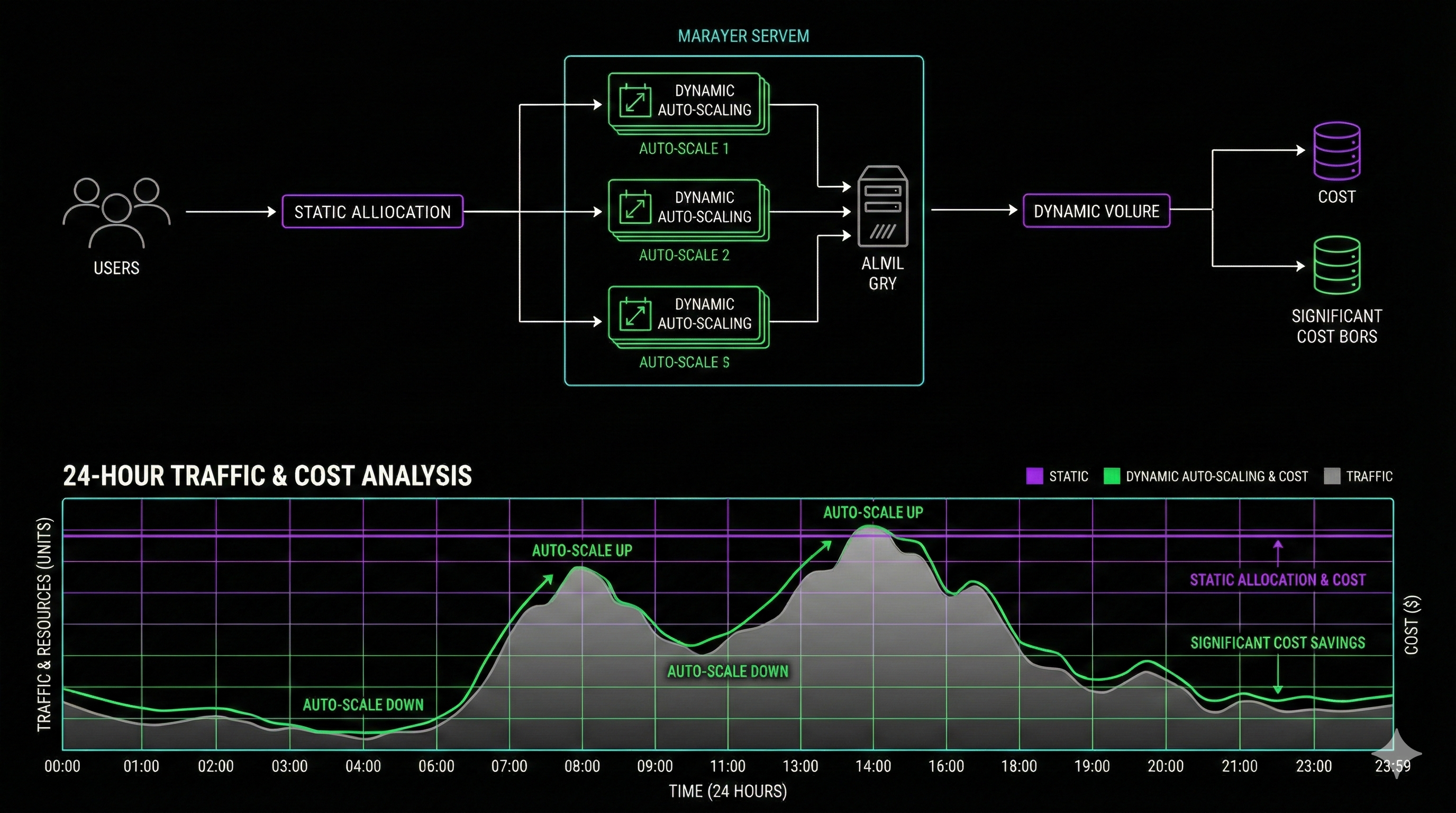
Static infrastructure leads to wasted resources during low-traffic periods.
Best practices:
- Enable horizontal auto-scaling for applications
- Scale based on real metrics (CPU, memory, request rate)
- Set reasonable minimum and maximum limits
Auto-scaling ensures you pay for capacity only when you need it.
3. Optimize Kubernetes Resource Requests & Limits
In Kubernetes, incorrect resource requests directly impact costs.
Common issues:
- Requests set too high "just in case"
- No limits, leading to resource contention
- No review after deployment
Optimization tips:
- Start with conservative requests
- Monitor actual usage
- Adjust regularly based on metrics
Proper Kubernetes tuning reduces both cloud costs and instability.
4. Clean Up Unused Resources Regularly
Unused resources quietly drain your budget.
Common culprits:
- Old load balancers
- Orphaned volumes and snapshots
- Unused IP addresses
- Stale development environments
Solution:
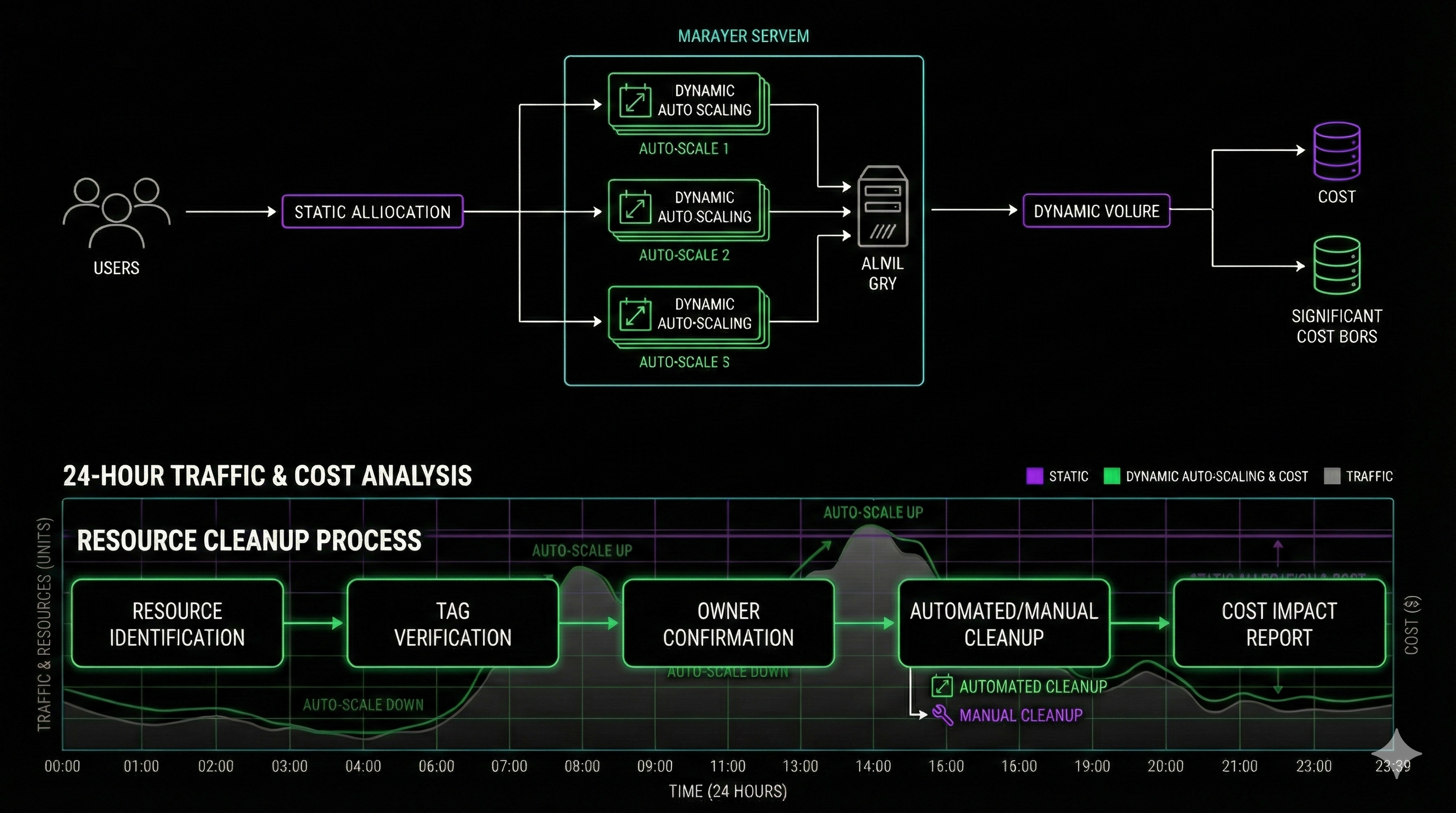
- Schedule regular cleanup audits
- Automate resource cleanup where possible
- Tag resources with ownership and purpose
*If no one knows what it's for, it probably shouldn't exist.*
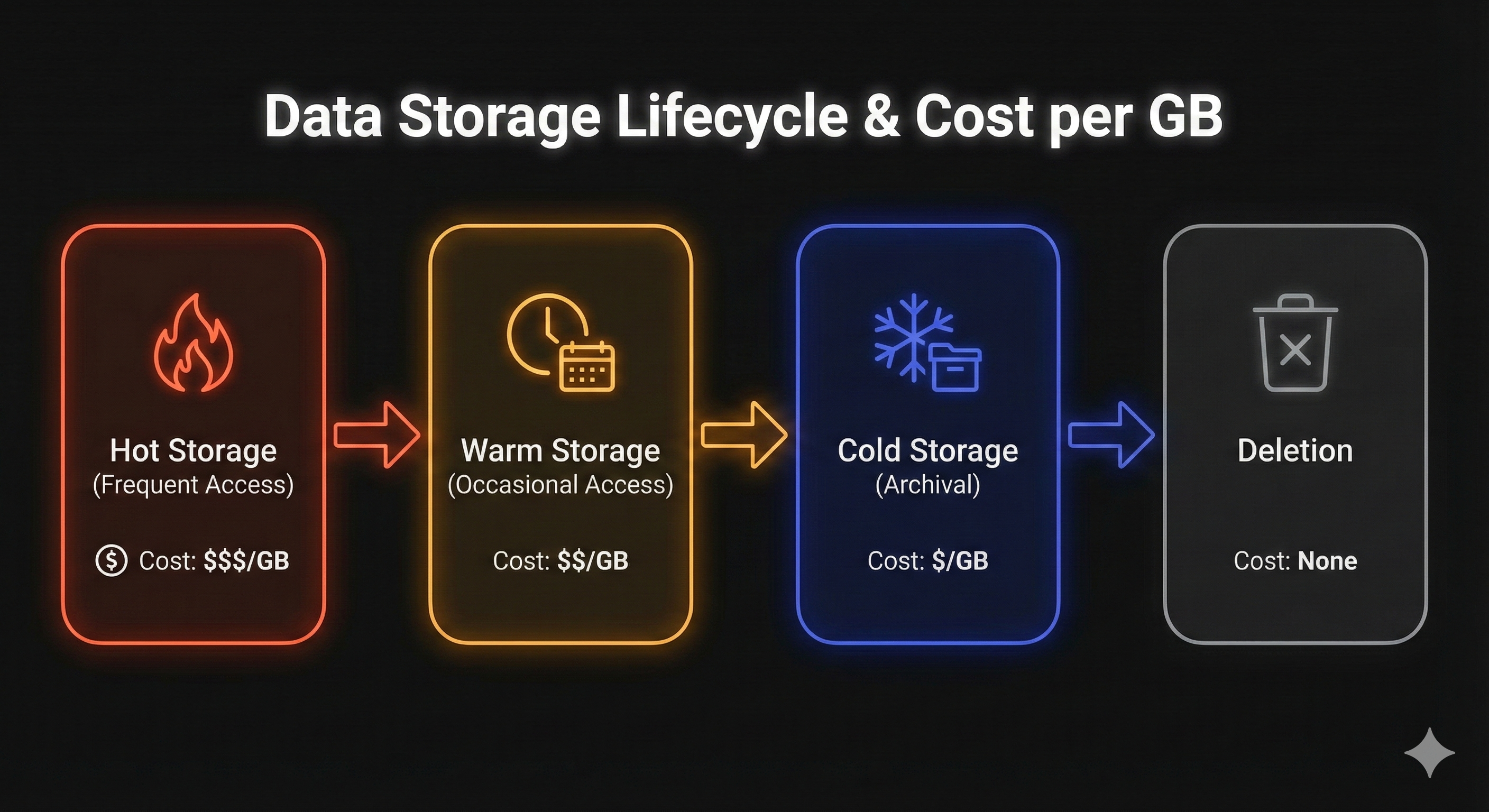
5. Optimize Storage Costs
Storage costs often grow unnoticed.
Cost-saving strategies:
- Use lifecycle policies for logs and backups
- Move old data to cheaper storage tiers
- Delete unnecessary snapshots and backups
Small storage optimizations add up over time.
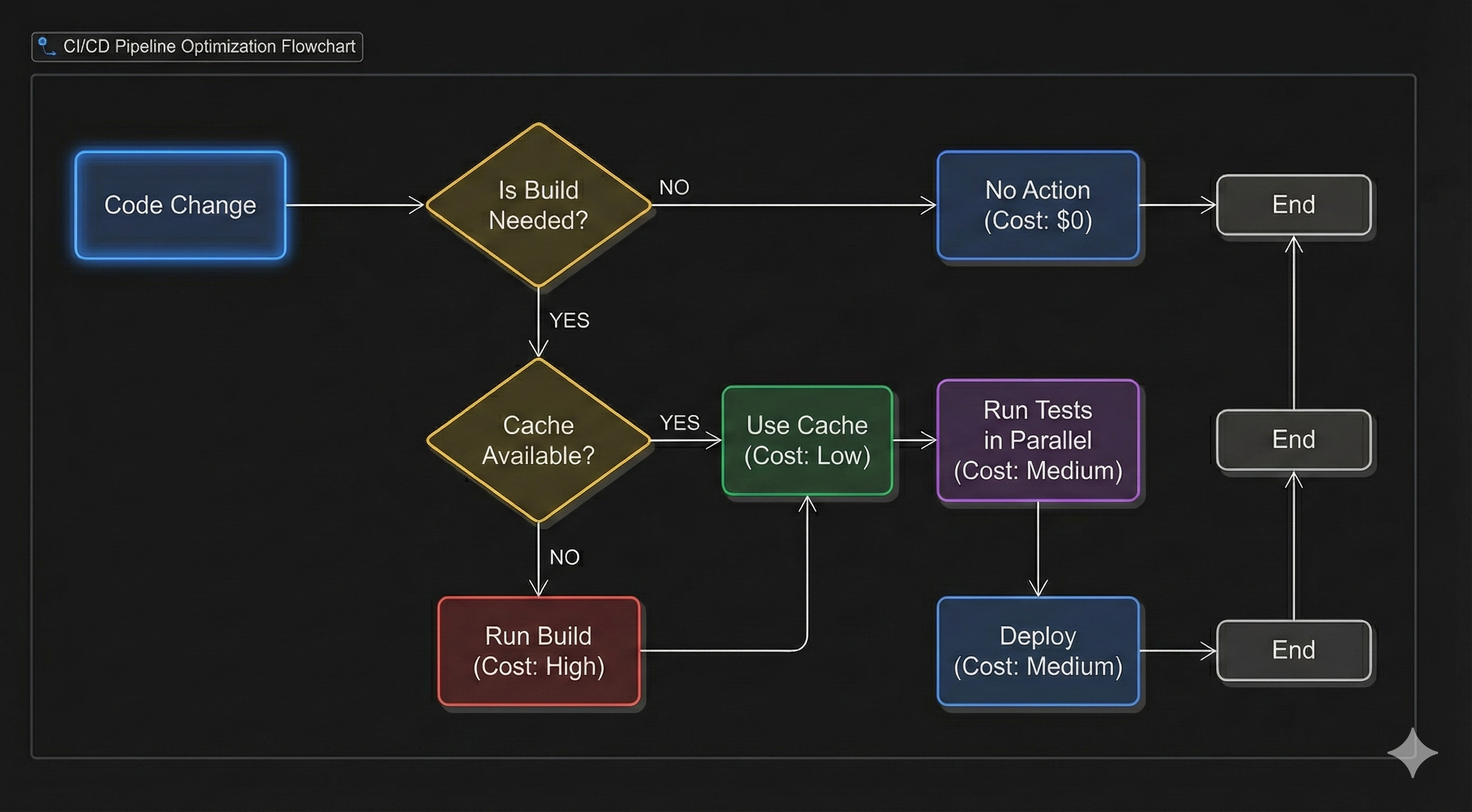
6. Improve CI/CD Efficiency
CI/CD pipelines can also be expensive if poorly designed.
Optimize by:
- Avoiding unnecessary pipeline runs
- Caching dependencies
- Using smaller, optimized build images
- Running heavy jobs only when needed
Efficient pipelines save both time and money.
7. Use Reserved Instances or Savings Plans
For predictable workloads, on-demand pricing is rarely the best option.
When to use:
- Stable production workloads
- Always-on databases or services
Reserved pricing models can significantly reduce long-term costs.
8. Monitor Costs Like Any Other Metric
If you don't monitor costs, you can't control them.
Best practices:
- Set up cost dashboards
- Track cost by service and environment
- Set budget alerts for unexpected spikes
Cost visibility enables proactive decision-making.
9. Reduce Over-Engineering
Complex systems often cost more than simple ones.
Warning signs:
- Multiple tools doing the same job
- Overly complex architectures
- Expensive services used for simple workloads
Start simple and scale only when necessary.
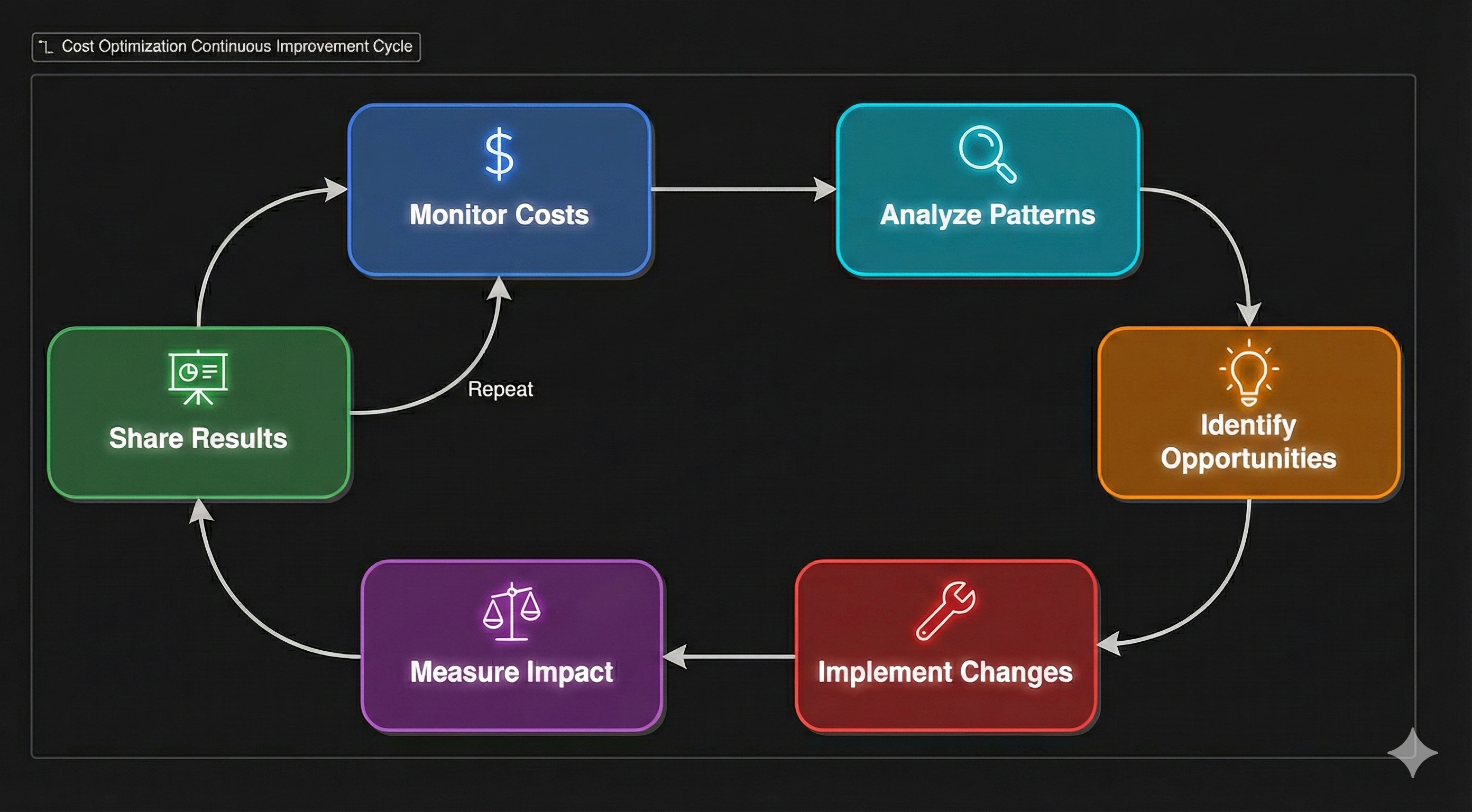
10. Make Cost Optimization a Team Habit
Cost optimization should not be a one-time task.
Build a cost-aware culture:
- Review costs regularly
- Share cost data with the team
- Include cost impact in architecture decisions
DevOps is about balancing speed, reliability, and cost.
Real-World Results
By applying these strategies, teams often achieve:
- 20–40% cloud cost reduction
- Better system performance
- Improved reliability
- Fewer surprises on monthly bills
Final Thoughts
Cost optimization is not about being cheap—it's about being smart.
A well-optimized DevOps setup is more reliable, more scalable, and more cost-effective.
If your cloud bill keeps growing without clear reasons, it's time to take action.
How Devopsby.me Can Help
At Devopsby.me, we help teams:
- Optimize cloud and Kubernetes costs
- Design efficient CI/CD pipelines
- Right-size infrastructure without downtime
- Build cost-aware DevOps practices
👉 Want to reduce your cloud costs?
Contact Devopsby.me and let's optimize your infrastructure.