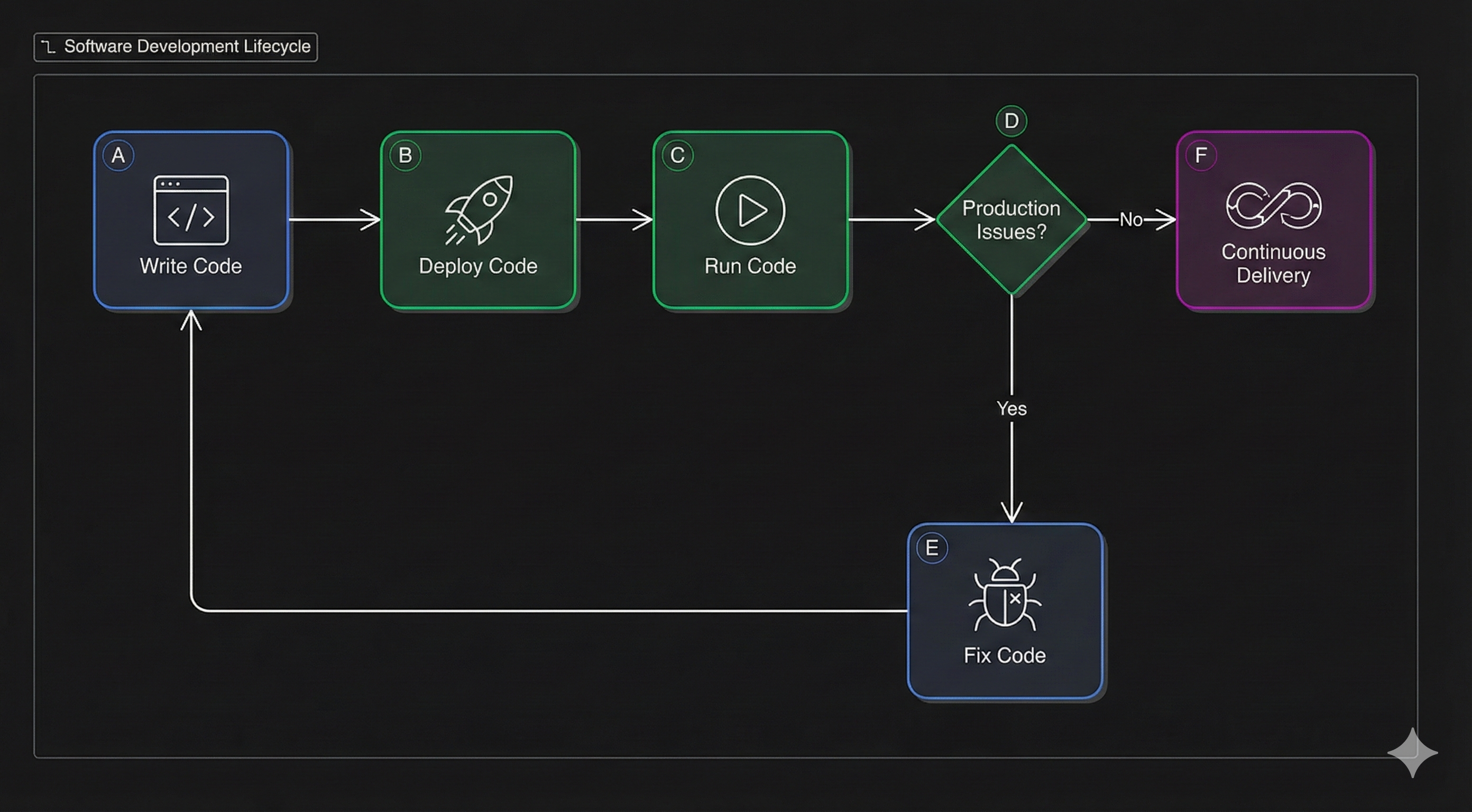
The Core Idea of DevOps
At its heart, DevOps answers one question:
How do we deliver software faster without breaking production?
DevOps exists to remove friction between:
- Writing code
- Deploying code
- Running code
- Fixing code when it fails
The goal is continuous delivery with confidence.
DevOps ≠ Tools (The Most Common Mistake)
Many teams believe:
"We use AWS + CI/CD, so we're doing DevOps."
This is a dangerous assumption.
You can have:
- GitHub Actions
- Docker
- Kubernetes
- Terraform
…and still:
- Deploy once a month
- Panic during outages
- Have zero visibility into production
- Bleed money on cloud costs
Tools enable DevOps. They don't define it.
The 6 Real Pillars of DevOps (With Best Practices)
1. Ownership & Responsibility
DevOps starts with ownership of production.
Best Practices
- Teams who build features should be responsible for running them
- No "throw it over the wall" mindset
- Clear on-call ownership
- Postmortems without blame
If you don’t feel responsible when prod breaks, DevOps is broken.
2. Automation Beyond CI/CD
CI/CD is only the entry point.
True DevOps automation includes:
- Infrastructure as Code (Terraform, Pulumi, CloudFormation)
- Automated environment setup
- Zero-touch deployments
- Scheduled backups
- Disaster recovery workflows
Best Practices
- Everything reproducible
- No manual production changes
- One-click (or zero-click) deployments
- Same setup across dev, staging, and prod
Automation exists to reduce human error, not just save time.
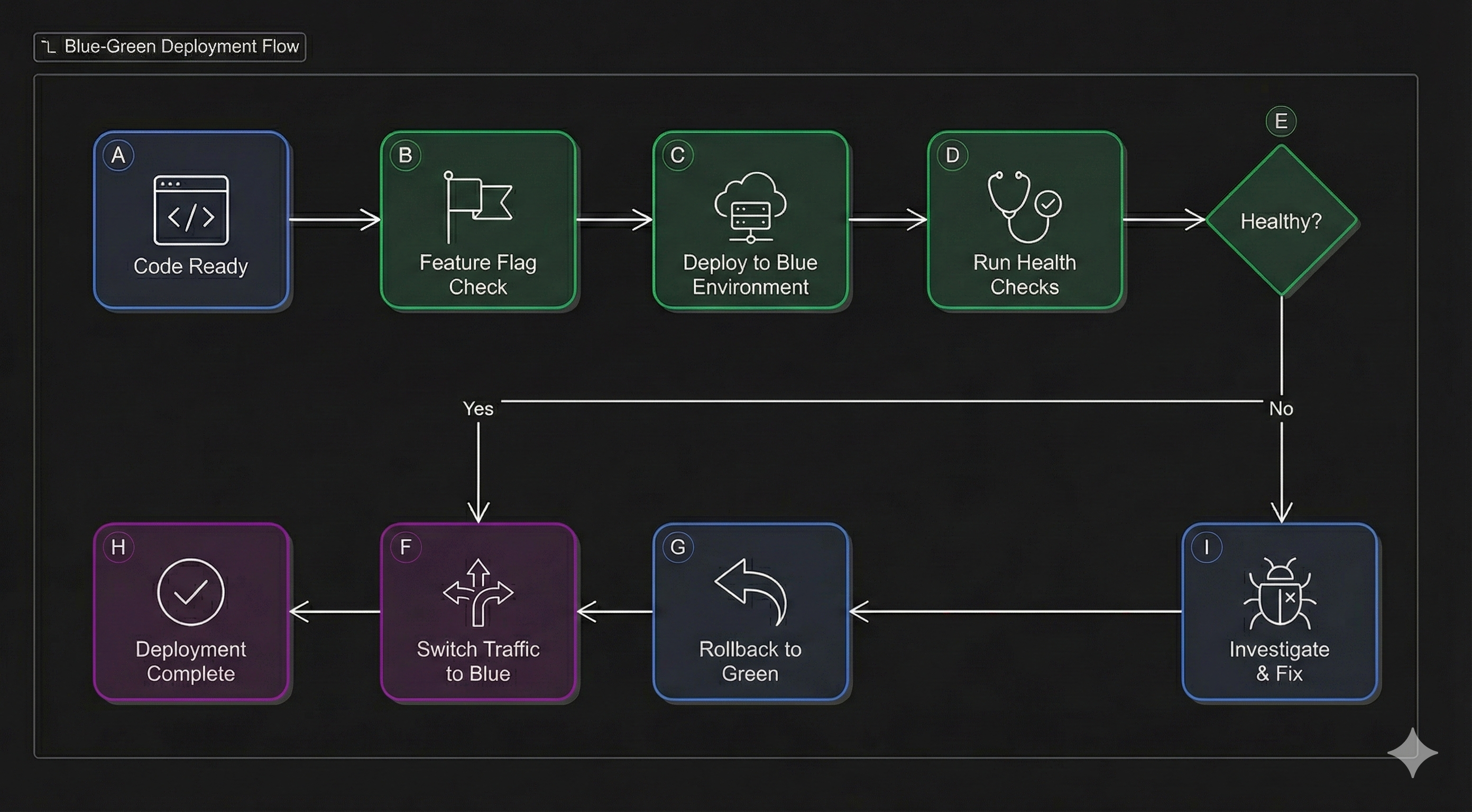
3. Reliable Deployments & Release Strategy
Shipping fast is useless if releases are risky.
Best Practices
- Small, frequent deployments
- Feature flags for risky changes
- Blue-green or rolling deployments
- Fast rollback mechanisms
- Deploy during predictable windows
If rollback is scary, your deployment process is wrong.
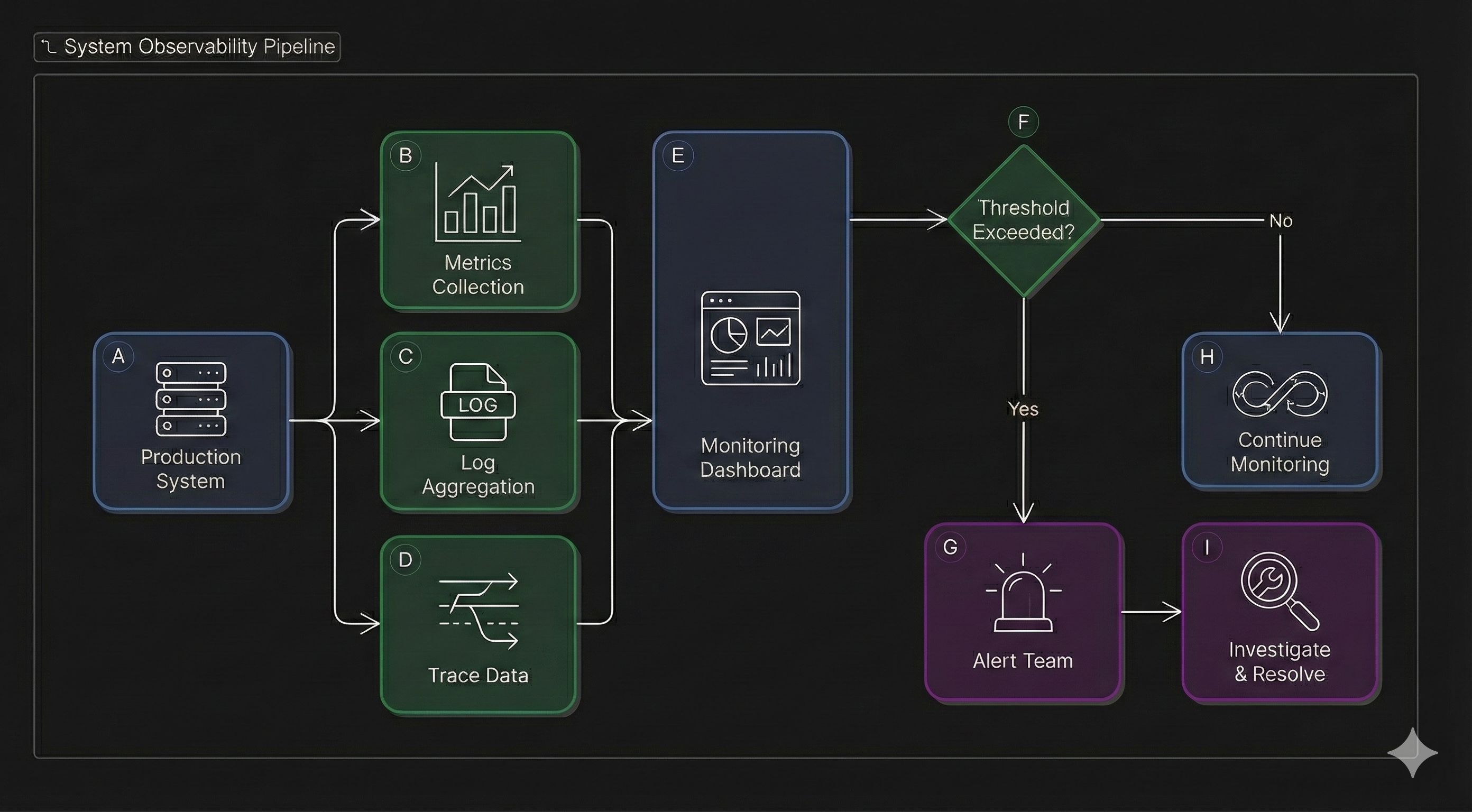
4. Observability: Metrics, Logs, Alerts
If you can’t see production, you can’t run production.
Best Practices
Monitor the four golden signals:
- Latency
- Traffic
- Errors
- Saturation
- Centralized logging
- Meaningful alerts (not spam)
- Dashboards for business + system metrics
Rule
If it's not monitored, it's already broken — you just don't know yet.
5. Reliability Over Perfection
DevOps does not aim for zero failures. It aims for fast recovery.
Best Practices
- Design for failure
- Assume things will go down
- Build self-healing systems
- Document runbooks
- Practice incident response
MTTR (Mean Time to Recovery) matters more than uptime promises.
6. Cost-Aware Infrastructure
Cloud is powerful — and dangerous. DevOps includes financial responsibility.
Best Practices
- Start simple, scale later
- Avoid Kubernetes unless you truly need it
- Prefer managed services when possible
- Use serverless where it fits
- Review cloud bills monthly
Saving infrastructure cost is real DevOps value, not "cheap behavior."
DevOps in Startups vs Enterprises
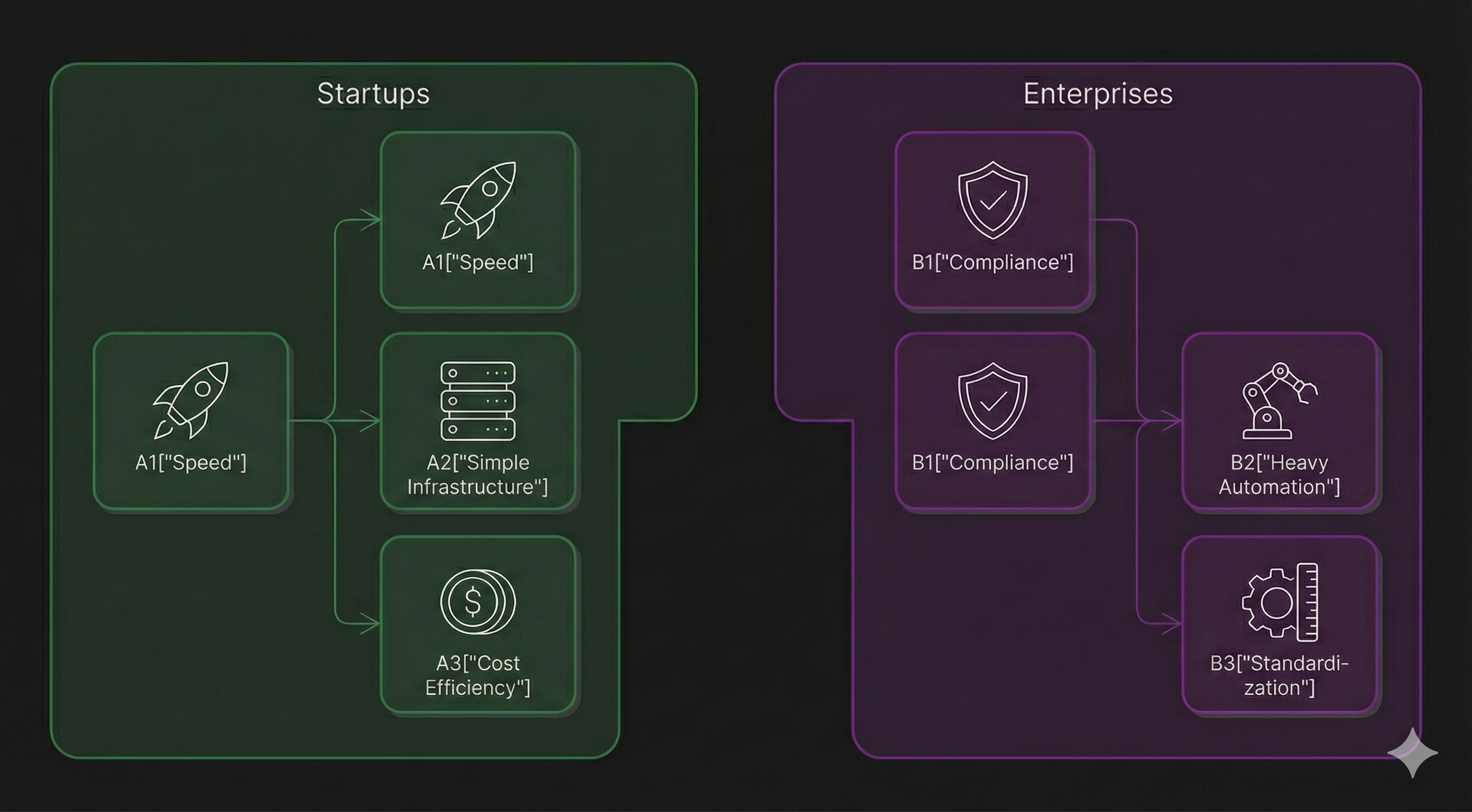
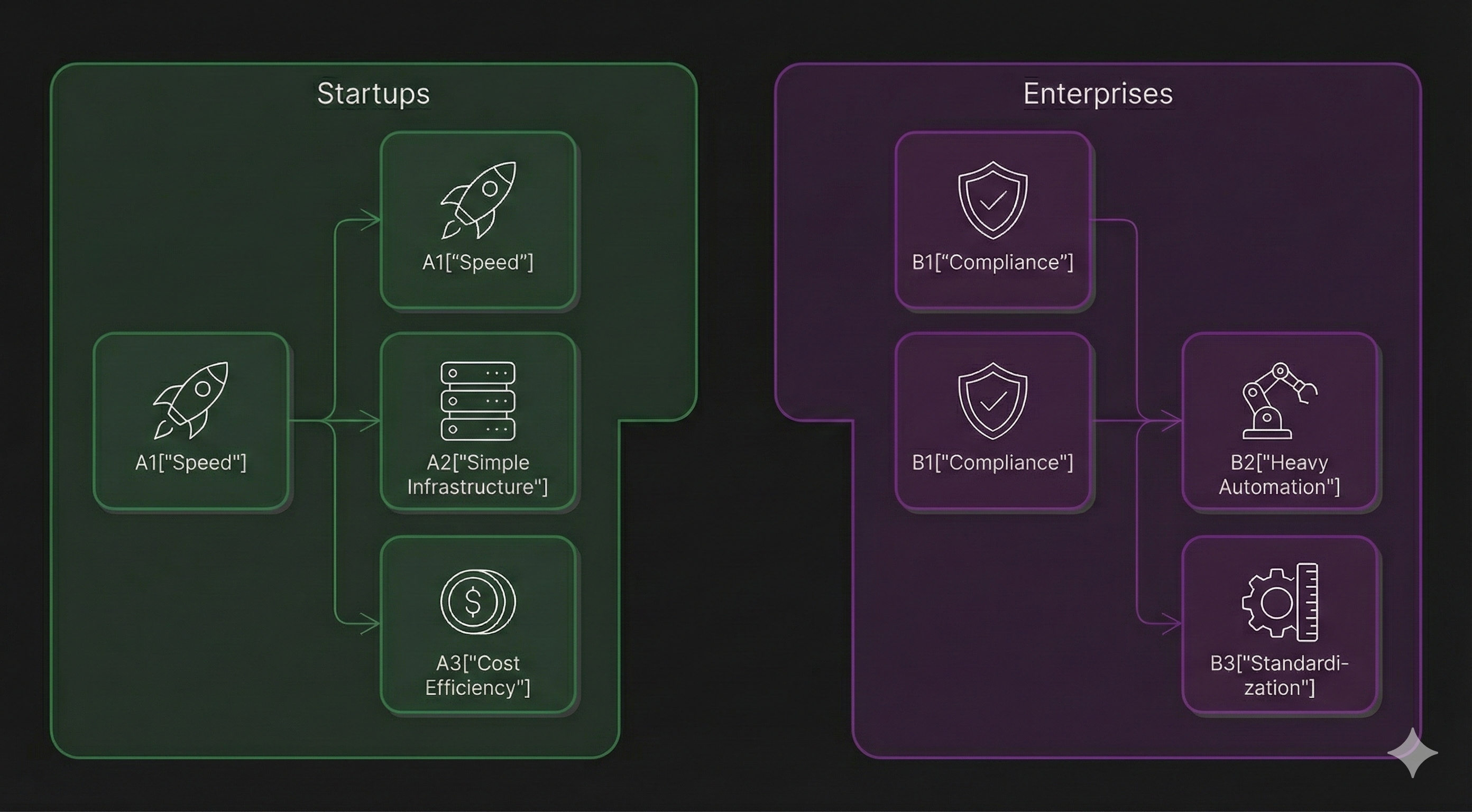
Startups
- Speed > complexity
- Simple infra > perfect infra
- Cost efficiency is critical
- Fewer tools, stronger fundamentals
Enterprises
- Compliance and security first
- Heavy automation
- Change management
- Multi-team coordination
DevOps Anti-Patterns (Avoid These)
- ❌ Kubernetes for a simple MVP
- ❌ No monitoring but heavy automation
- ❌ Manual hotfixes in production
- ❌ One DevOps engineer owning everything
- ❌ Ignoring cloud cost until it's "too late"
A Simple DevOps Maturity Checklist
Ask yourself:
- ? Can we deploy anytime without fear?
- ? Do we know when prod is unhealthy?
- ? Can we recover in minutes, not hours?
- ? Is infrastructure reproducible?
- ? Are costs predictable?
If yes → you're doing DevOps.
The Real Outcome of Good DevOps
Good DevOps means:
- ✓ Faster releases
- ✓ Fewer incidents
- ✓ Calm teams
- ✓ Predictable costs
- ✓ Confident scaling
Not fancy dashboards. Not buzzwords. Just systems that work under pressure.
Final Thoughts
DevOps is a mindset backed by strong engineering practices.
Tools will change. Cloud providers will change. Frameworks will change.
But the principles of Ownership, Automation, Reliability, Observability, and Cost awareness will always define real DevOps.