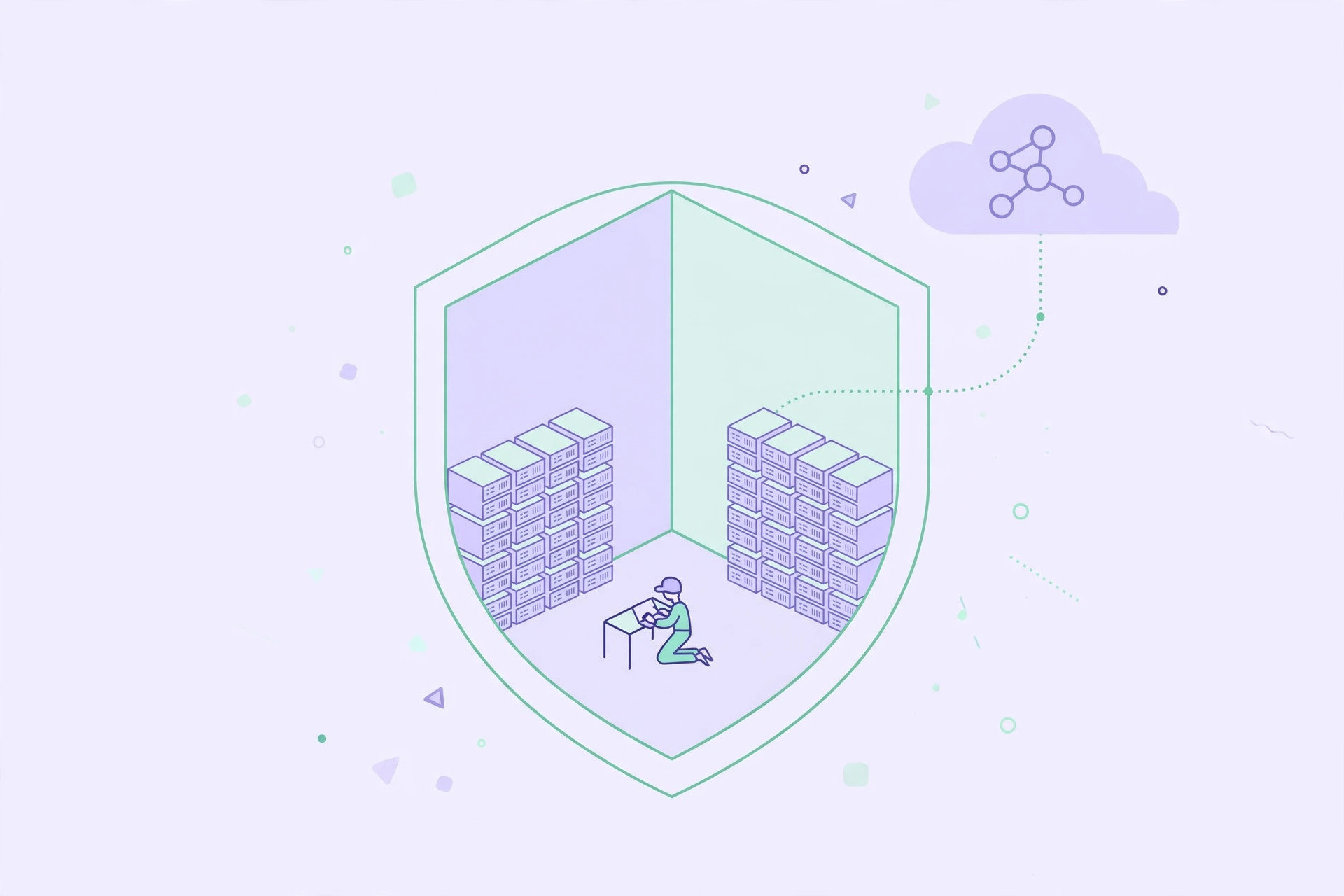
On November 12, 2026, Anthropic opened a private beta of self-hosted Claude Managed Agents. The idea is simple to state and easy to get wrong: the agent service moves inside your security perimeter, but Claude itself does not. Businesses can now run the entire Managed Agents service on their own cloud or on-premises infrastructure, including the agent harness, the sandboxes, the credentials, and the session history. That is the whole control plane for long-running agents, the kind that work through a bug backlog, fix builds, test releases, and triage alerts over hours, instead of answering one chat message and stopping. The model calls still leave your site and go to a provider you choose: Anthropic directly, Amazon Bedrock, Google Cloud, Microsoft Foundry, or your own gateway.
What runs on your servers
Three pieces live on your side of the boundary. The cma-server serves the Managed Agents API, runs the agent loop, and stores agents, sessions, and history. A PostgreSQL 16 or later database holds that history. Workers run the agents' shell and file tools inside your own sandboxes, and the server itself never runs an agent's shell or file tools. For production, Anthropic recommends Kubernetes, with two Helm charts in the release archive. Anthropic says it has no remote access to your self-hosted server or its logs. That is a real control over the harness, the history, and the credentials, which is exactly what regulated teams and security reviewers have been asking for. It is not a control over the model traffic, and the distinction matters for any data review: prompts, tool results, and context still travel to whichever provider serves the model call.
What is missing, and what it costs to switch
This is a private beta, and the limits are stated plainly. Access is only through an Anthropic account team, for eligible organisations, with no public price for the server software and no date for a wider release. Seven hosted features are missing in the self-hosted version, per Anthropic's docs, among them cloud environments, the Files API, webhooks, scheduled deployments, and dreams. Nothing migrates from the hosted service: agents, skills, vault credentials, memory stores, and session history must all be rebuilt. The licence published the same day, effective November 12, gives a licensee eight hours to roll back a version after a safety notice and one business day to apply a safety update. Treat the beta label seriously: Anthropic says explicitly that it is not for production. The right first move is a pilot on non-production work, with the model provider and the data that leaves your site written down and approved, not assumed.
Who this is actually for
This is for teams whose blocker was never the model, it was where the agent loop lived. If your code, your tickets, and your session history could not sit on a vendor's servers, self-hosting removes that blocker while keeping the same API and the same agent loop. If your blocker was the model leaving your site, it does not, so a fully air-gapped agent is still not on offer. The wider pattern is worth noting: Mistral took Mistral Studio to customer VPC and on-premises deployments on November 6, a week earlier, so the self-hosted agent is becoming a standard enterprise shape, not a one-vendor move. If you are building your first agent and want the skeleton first, our n8n AI agent guide covers the loop and the iteration cap that stops an agent from running forever on your bill. If you run agents on your own hardware and want the serving layer right, our vLLM serving guide covers the measure-first discipline. If you want the guardrails, the spend alerts, and the monitoring around an agent setup checked by someone who runs infrastructure for a living, book a free infra audit with DevOpsBY.
Disclaimer: This post is educational only, not financial advice. Figures are as reported by the sources on 2026-11-14 and may change - always confirm version numbers, requirements, and prices in the official docs before acting on them.