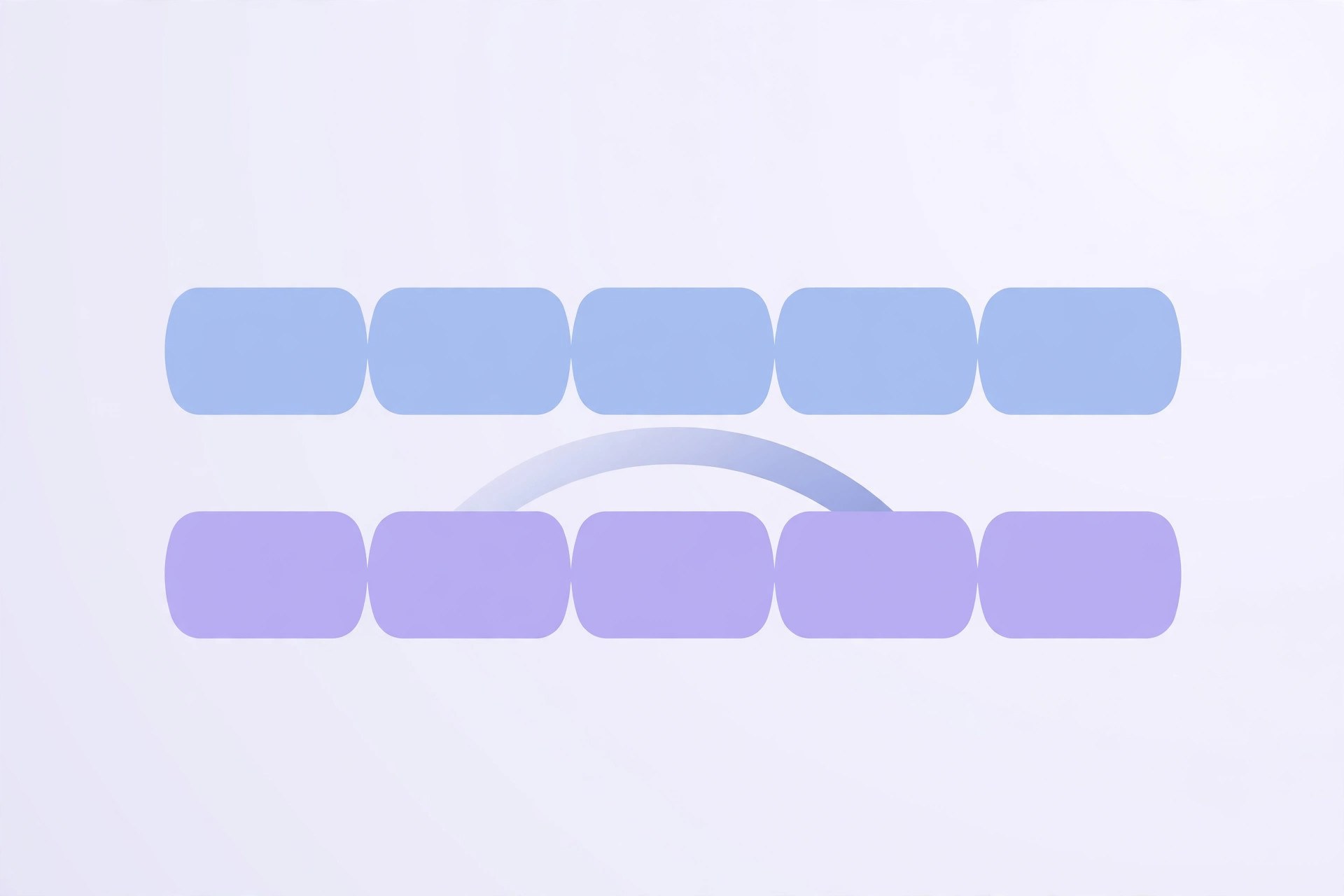
A sidechain is a separate blockchain that runs alongside a main chain and connects to it through a bridge. It has its own blocks, its own validators, and its own rules, and it moves assets back and forth with the main chain instead of living on it. Sidechains exist for a simple reason: the main chain is slow or expensive for some jobs, and a separate chain can do those jobs faster and cheaper while still letting users bring their assets home. This post explains how a sidechain works, how it differs from a Layer 2, why projects choose one, and what it takes to run one.
If the basics of chains and consensus are new to you, start with our validator node explainer and our consensus explainer. This post builds on those: a sidechain is a whole second chain, with its own consensus, attached to the first.
How a sidechain works
A sidechain and its main chain are two independent blockchains, linked by a two-way bridge. To move assets from the main chain to the sidechain, a user locks tokens in a bridge contract on the main chain, and the sidechain mints an equal amount of wrapped tokens on its side. To move back, the wrapped tokens are burned on the sidechain, and the bridge releases the locked tokens on the main chain. The lock-and-mint design keeps the total supply honest: tokens only exist on one side at a time, and the bridge is the ledger that proves it.
The key point is independence. The sidechain chooses its own consensus mechanism, its own block time, its own validator set, and its own fee market. It does not ask the main chain to validate its blocks. That independence is the whole trade: the sidechain can be fast and cheap because it sets its own rules, and it pays for that freedom by standing on its own security instead of borrowing the main chain security. A bridge is usually operated by a multisig, a validator set, or a smart contract, and who controls the bridge is one of the first things to check before trusting any sidechain with real assets.
Sidechain vs Layer 2: the security question
Sidechains and Layer 2s are often confused because both sit next to a main chain and both make transactions cheaper. The difference is where the security comes from. A Layer 2, such as a rollup, posts its transaction data or proofs back to the main chain, so the main chain can check its work and the Layer 2 inherits the main chain security. A sidechain does not do that. Its blocks are final because its own validators say so, and if its validator set is compromised, the main chain cannot step in and fix it. That is why a sidechain is a separate trust assumption, not a scaled version of the main chain.
A useful test: ask where a transaction becomes final. If finality comes from the main chain, you are looking at a Layer 2. If finality comes from the sidechain own validators, you are looking at a sidechain. The best-known example is Polygon PoS, often described as a sidechain of Ethereum: it runs its own proof-of-stake validator set, settles checkpoints to Ethereum, and moves assets through a bridge. It is fast and cheap precisely because its validators, not Ethereum, decide its blocks, and it carries its own validator-set risk for the same reason. When you evaluate any chain that calls itself a Layer 2, check whether it actually posts proofs to the main chain or whether it is a sidechain with Layer 2 branding. The label matters less than the mechanism.
Why projects choose a sidechain
Projects choose sidechains for four reasons. First, throughput and fees: a chain with a small validator set and short block times can process far more transactions per second at a fraction of main-chain cost, which is what games and high-frequency apps need. Second, custom rules: a sidechain can pick a different virtual machine, a different fee token, or different governance without asking the main chain to change. Third, experimentation: a team can try a new consensus design or a new feature on a sidechain where a failure does not halt the main chain. Fourth, independence of upgrades: the sidechain can hard-fork on its own schedule. The cost of all four is the same trade described above: the sidechain security is only as strong as its own validator set and its bridge, and users who move assets there accept that.
What operators need to run a sidechain node
Running a sidechain node is close to running any other chain node, with two additions. First, the node software is the sidechain own client, with its own sync process, disk needs, and peer network, so check its docs rather than assuming main-chain settings transfer. Second, the bridge matters: if your app serves sidechain users, your RPC needs to stay synced with both the sidechain and the main chain, because a deposit is only confirmed when both sides agree. Read the sidechain docs for validator requirements before committing hardware, because validator sets vary widely: some sidechains need a large stake and an application process, others let anyone validate with modest hardware. Our private RPC setup guide and our RPC failover guide apply directly: two synced endpoints, health checks against the chain tip, and a fallback that is actually tested. The only sidechain-specific addition is to monitor the bridge separately, because a healthy node and a stuck bridge still means stuck users.
The risks to understand before you use one
Three risks deserve a plain statement. Bridge risk is first: the bridge holds the locked main-chain assets, so a bug or a compromised bridge key can drain them, and bridge exploits are among the largest losses in crypto history. Check who controls the bridge, how many signatures it needs, and whether it has been audited, and treat a bridge you cannot answer those questions about as untrusted. Validator-set risk is second: a small or centralised validator set can censor transactions or rewrite recent history more easily than a large one, so check how many validators secure the chain and how stake is distributed. Finality risk is third: a sidechain block that looks final can still be reorganised if its own consensus allows it, so confirm how many confirmations your app waits for, and do not treat one confirmation as settled for large transfers. None of these risks means sidechains are unusable. They mean the security question is answerable in advance, and it should be answered before assets move, not after.
A sidechain is a trade, stated plainly: speed, low fees, and custom rules, in exchange for trusting a separate validator set and a bridge instead of the main chain. For games, for high-volume apps, and for experiments that need their own rules, that trade is often the right one. For settling large value that must never be questioned, the main chain is usually the better home. If you are choosing where to run infrastructure, or deciding whether your app needs a sidechain node, an RPC endpoint, or both, book a free infra audit with DevOpsBY. We run nodes, RPC, and validator infrastructure for Web3 teams, and we will tell you plainly which side of the trade your use case sits on.
Disclaimer: This post is educational only, not financial advice. Figures are listing or project data as of 2026-11-11 and may change - always confirm version numbers, requirements, and dates in the official docs before acting on them.